
Postcard from SFGC Alum Michele Kennedy
In SFGC’s Postcard series, our guest artists, collaborators, and faculty take us behind the scenes and share an intimate look into their thoughts about music, life, and art-making.
This postcard features Award-Winning Singer and San Francisco Girls Chorus Alum
Michele Kennedy.
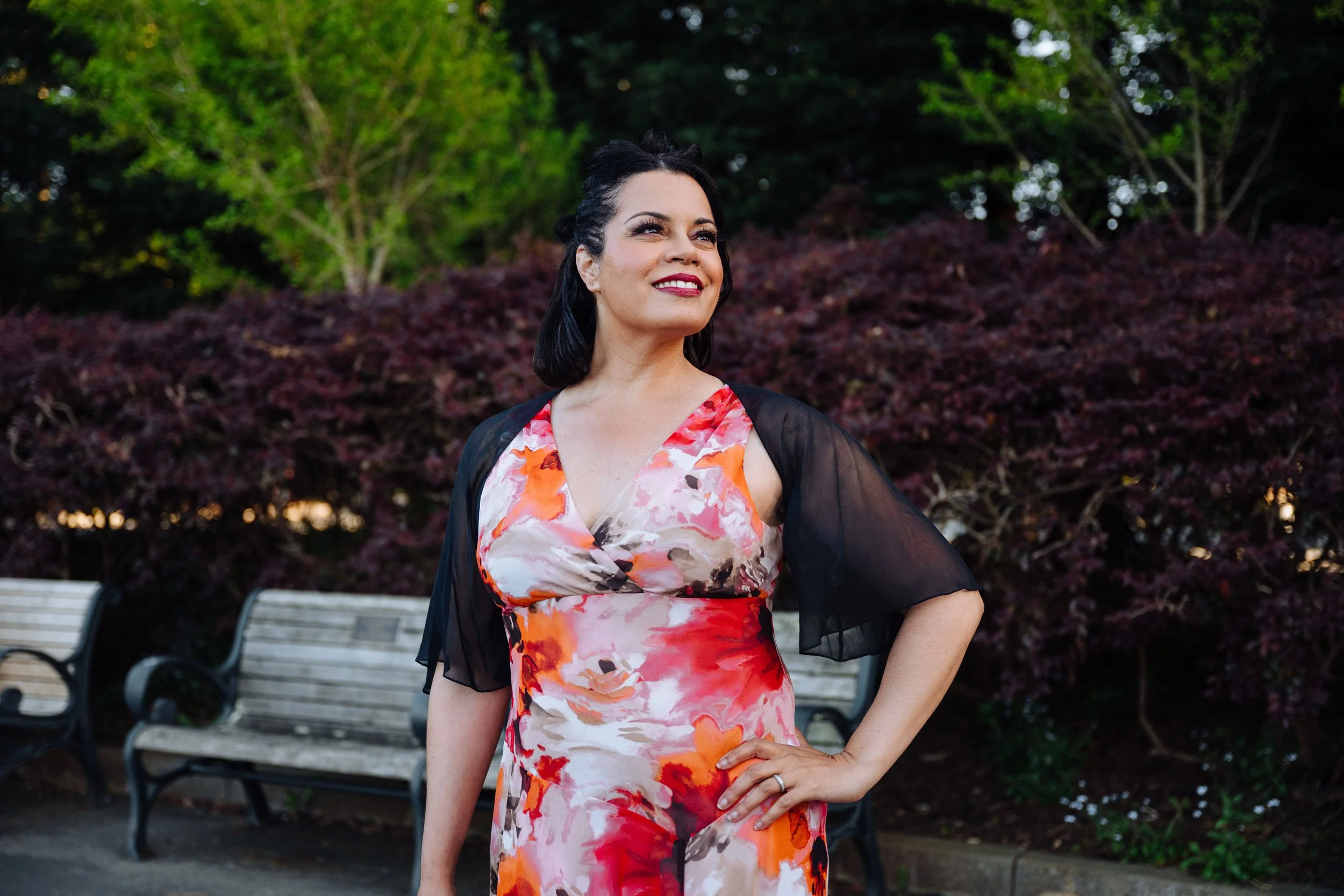
Praised by The Washington Post as “an excellent and engaging” soprano possessing "a graceful tonal clarity that is a wonder to hear" (SF Chronicle), SOPRANO MICHELE KENNEDY is a versatile specialist in early and contemporary music. She is a winner of the 2025 Berlin International Classical Music Competition and the 2023 American Prize in Voice.
Michele’s recent highlights include Bach's St. John Passion with the San Francisco Symphony, Gabriel and Eve in Haydn’s Die Schöpfung with Washington Bach Consort, Handel’s Messiah with NYC’s Trinity Wall Street, Poulenc’s Gloria with Bach Society of Saint Louis, Smith Moore's MLK Oratorio at UC Berkeley, and her Carnegie Hall debut with The Hollywood Film Orchestra. This season, she joins Portland Baroque Orchestra for Bach’s Magnificat, SF Choral Society for Bach’s Mass in B Minor, and The Thirteen Baroque Orchestra for Handel’s Messiah.
A lifelong champion of new works, Michele has sung premieres with Experiments in Opera, Kaleidoscope Ensemble, Seraphic Fire, The Crossing, and The New York Philharmonic. She is thrilled to join Lorelei Ensemble in a world premiere tour of Julia Wolfe’s Her Story culminating with the Boston Symphony Orchestra at Tanglewood, and for her first featured solo album with AGAVE, called In Her Hands, featuring trailblazing female composers from Barbara Strozzi and Clara Schumann to Florence Price and Margaret Bonds. In June 2026, Michele will return to Carnegie Hall for Dan Forrest’s extraordinary Requiem For the Living - truly a piece for our time.
Michele completed her studies at Yale University, Yale School of Music, and NYU. A lover of Redwood groves and Bay vistas, she lives with her husband, visual artist Benjamin Thorpe, and their daughter, Audra May.
What first sparked your love of singing during your time at SFGC?
When I first started taking piano lessons at age 3, I was extremely shy and introverted, so I found the instrument to be such a natural comfort. My love of piano playing also led me to discover my love of singing. In fact, when I was supposed to be practicing at the keyboard, my parents often found me singing instead! So it felt entirely natural to join the chorus at age 7, though I was still so shy that it took months of rehearsals and a few concerts before I began to build my confidence. That was when I really started to love singing with other people, and that awakening – of deep music-making in community – was totally magical. It changed my life forever.
How did being part of the Chorus shape your musical path?
Without the rich array of experiences and lasting mentorship that I found in the Girls Chorus, I never would have pursued a career in music. To wit, when I first joined Level III, I was too shy even to look up at the conductor! My parents can attest that it took me months to start feeling comfortable, and much longer to really start enjoying myself both on-stage and off. But once I did, it became abundantly clear that music was my life's calling - all of the years of rehearsals and performances with the SFGC gave me the foundation that I needed to create a fulfilling career in music.
How do you bring something fresh to historic music in your work today?
I specialize in early music - Baroque and Classical - and love performing historic music alongside modern repertoire: that dialogue sparks so many fascinating ideas and questions. You can curate a program comparing text-setting across the ages, celebrating a relationship between artists, exploring the historic context for a particular work, or highlighting the particular lens of a composer or a poet… the possibilities are endless!
I especially love this approach as a way to bring less visible voices, historically speaking, to the stage. Even as we celebrate the known masterpieces of Bach, Handel, Monteverdi, Beethoven, Mahler, and Haydn, we must champion female, queer, BIPOC, and living composers’ works alongside them – how can we create meaningful parallels and compelling concert themes that reflect the full breadth of today’s America? Is that not an essential calling for the viable future of classical music?
Is there a piece or composer that has stayed with you since your SFGC years?
When I was eleven years old, we performed a song cycle called Red May by beloved Bay Area composer Kirke Mechem that I remember with such clarity - he painted lots of glorious vocal colors in that piece, and vivified the text with subtlety and grace. I also remember working with Chen Yi, who has such a natural presence with young people, and loving the breadth and rigor of her work. Many of the choral settings that we sang in different languages - Mandarin, Spanish, Hungarian, et al - remain with me to this day.
What advice would you give young singers in the Chorus now?
Embrace the chance to learn different styles of singing, movement, and text setting - even (and especially) when it begins to take you out of your comfort zone. True and lasting learning necessitates a bit of discomfort; that is how we know that we are delving deeply into something new. Remember to breathe into it, to ask questions, and to know that your perspective is always unique and valuable.
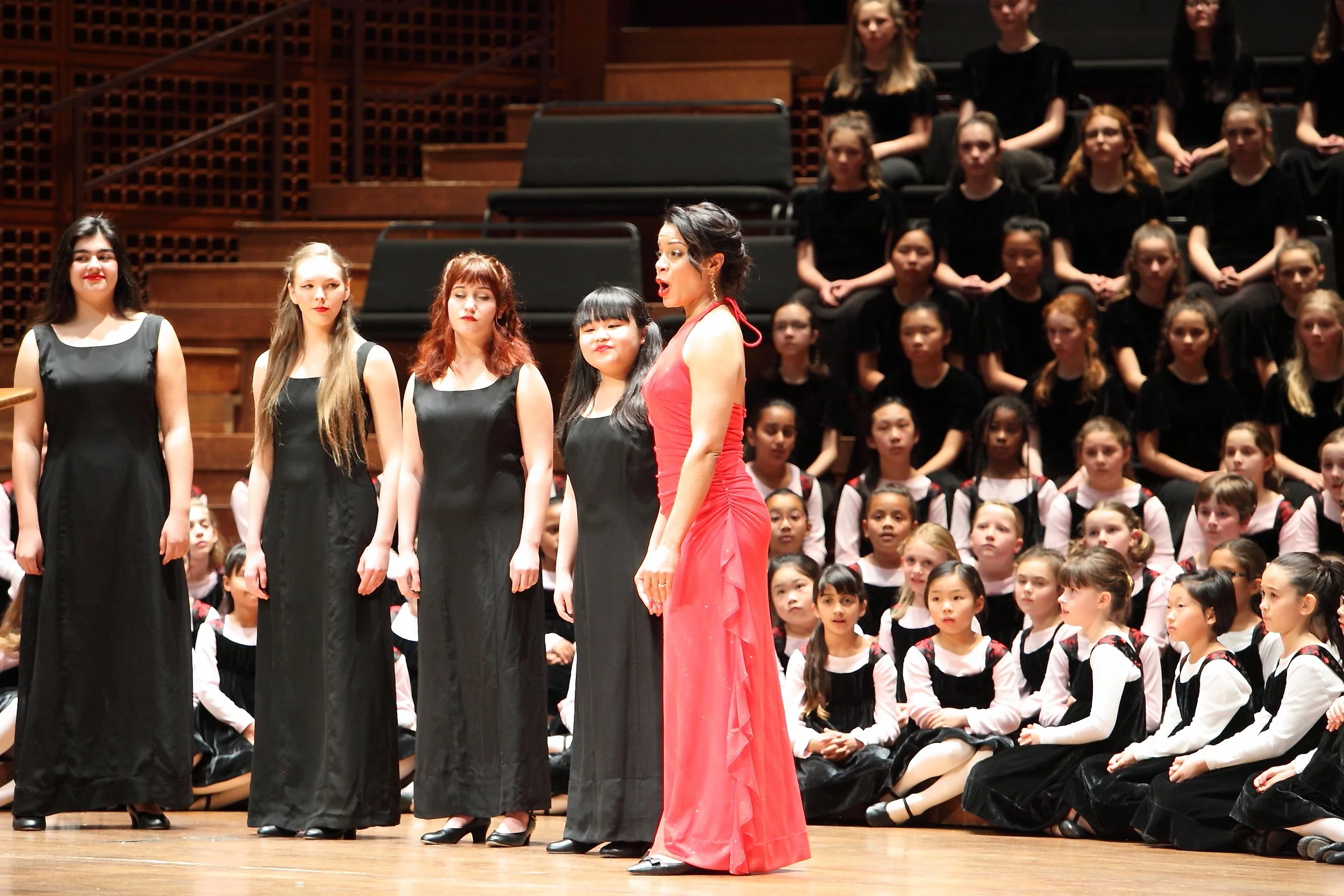
How has your choral training influenced your work as a solo artist?
The underlying work ethic is quite similar for solo work: I channel the same kind of diligence, daily practice, love of vocal pedagogy and various languages, and deep fulfillment in my studies that I first learned in the Girls Chorus. It brings me so much joy!
What do you see as a major challenge—or opportunity—for women in classical music today?
I find it thrilling to see a growing sense of gender inclusivity on the stage. There are more outlets for queer, nonbinary, and LGBTQ+ composers and performers all of the time: what a thrilling opportunity for the next generation of musicians to help usher in a new era of understanding and inclusion of artists of all gender types and identities.
What dream project or collaboration are you hoping to take on next?
I just entered my first international vocal competition - the Berlin Classical Music Competition - and was totally bowled over and honored to win first prize! Expanding my career to Europe, and especially to Germany, has been a dream of mine for years: I am thrilled about this next chapter and the chance to forge some new musical relationships overseas.
If you could send a postcard from anywhere on your travels, from where would you send it?
Traveling the world as a musician is a tremendous gift. I feel so thankful to have been to Salzburg, Tel Aviv, Shanghai, London, Mexico City, and beyond. But to be real, I would have gone nowhere without the beauty and sanctity of my childhood home in Oakland, California - I would send a postcard with a majestic grove of Redwoods right from my hometown!
Join Us on FOr the 47th Annual Gala
This festive evening at the historic San Francisco War Memorial Building will include SFGC Alum Michele Kennedy and our very own Premier Ensemble and Concert Group performing in the Herbst Theater followed by a gala reception in the Green Room.